AGP Executive Report
Last update: 2 days agoIn the past 12 hours, coverage has been dominated by tourism economics, travel-industry promotion, and a cluster of health-and-safety items. North Carolina’s tourism sector was highlighted with record spending: Gov. Josh Stein announced visitors spent $37.2 billion in 2025, surpassing the prior $36.7 billion (2024) record, with the announcement tied to National Travel and Tourism Week (May 3–9). Related local/industry pieces also emphasized how tourism is being packaged for audiences and stakeholders—such as Brunswick County’s participation in National Travel and Tourism Week, and multiple travel-media and hospitality updates (including Travel Media Association of Canada award winners and new partnerships/offerings around major venues like Toronto’s Rogers Stadium). There was also consumer-facing travel guidance and friction: TSA warned travelers about a banned “live” 30mm ammunition round (and clarified what types of ammunition are allowed), and a German tourist won compensation after a “sunbed war” dispute at a Greek resort left his family without loungers.
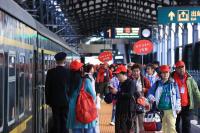
A second major thread in the last 12 hours is how travel demand is shifting in response to experience preferences and risk perceptions. China’s May Day holiday coverage described a move away from “long queues” and toward more immersive, personalized experiences, including county-level and industrial heritage tourism. Separately, Bosnia’s tourism figures pointed to growth driven largely by international visitors (foreign travelers making up 68.5% of stays). On the leisure side, multiple destination and product announcements reinforced the ongoing “experience economy” framing—ranging from a new luxury all-inclusive resort opening in Crete (Ikos Kissamos) to a ranking-style roundup of top theme parks (with Futuroscope topping Tripadvisor’s list).
Health and outbreak monitoring also featured prominently, though the evidence in this 7-day slice is more operational than policy-focused. A report described a hantavirus-exposed flight attendant admitted in Amsterdam after contact with a Hondius cruise ship case, with Dutch authorities testing passengers on the related flight. Additional coverage in the same window referenced broader hantavirus monitoring and tracing efforts, including how passengers and contacts are being followed across jurisdictions—suggesting ongoing concern for travel-linked spread, even as some reporting frames public risk as low (though the most explicit “risk level” language appears in older text within the range).
Looking slightly further back for continuity, the same week’s coverage shows tourism events and major sporting travel as a recurring organizing theme. Multiple items tied to the 2026 FIFA World Cup focused on fan logistics and local preparations (including ticket-price controversy commentary and local fan-event planning), while other pieces continued to track travel disruptions and market responses (e.g., airline/airport operational impacts and broader “summer travel” planning concerns). Overall, the most recent reporting is strongest on tourism performance announcements and travel-industry messaging, with hantavirus monitoring and World Cup-related travel planning acting as the main “risk/complexity” overlays rather than indicating a single new, unified crisis.
Note: AI summary from news headlines; neutral sources weighted more to help reduce bias in the result.